What We Measure at Your Physical Therapy Evaluation (And Why It Matters)
"What did I get?"
That's usually the first question we get after dynamometry testing, like we just read their tea leaves and are about to compare it to their zodiac sign.
At Tundra Performance and Physical Therapy, when you come in for a physical therapy evaluation, sometimes a huge piece of our patient’s assessment comes from a single test: isometric dynamometer testing. Also seen in our return to play, running, and performance assessments.
Let's pull back the curtain a little bit and dive into what is dynamometry testing and why do the numbers matter?
What is isometric dynamometry?
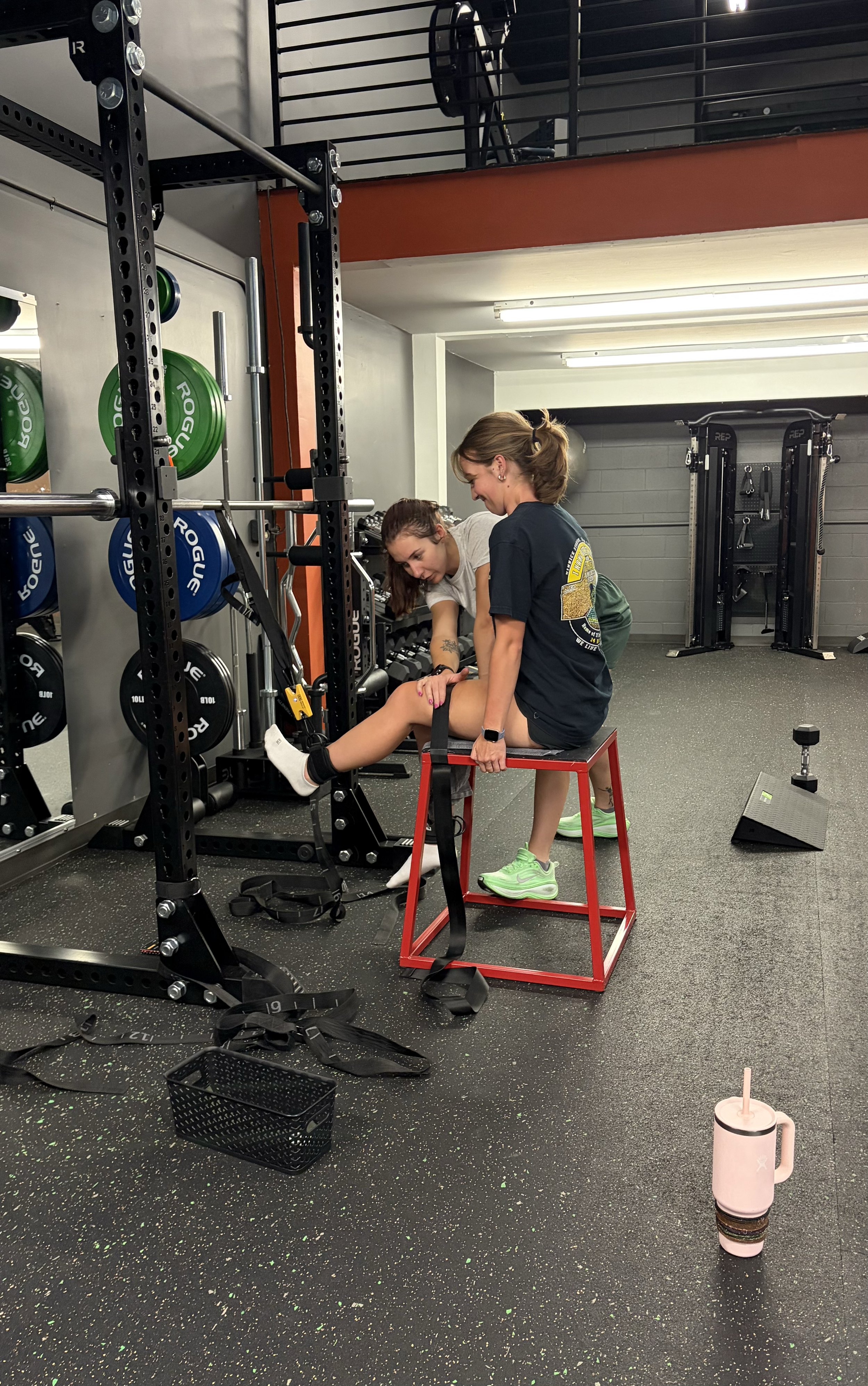
An isometric dynamometer test measures maximal force output. Basically, how much force a muscle group can produce when it pushes or pulls against something that doesn't move. No fluff, no bullshit. Simply how much force can you actually produce, right now, in this position.
That number matters because force output correlates directly with strength. It's not a proxy or an estimate, it's a direct read on the capacity of the tissue you're testing.
For a skier rebuilding quad strength after a knee injury, a climber assessing finger strength after a pulley injury, or a lifter trying to figure out why one side of a lift feels "off," this is about as close as we get to ground truth.
The First Line of Defense: Symmetry
Once we have our force number, the first thing we do is compare it side to side. If your right quadriceps produces 220 lbs of force and your left 150 lbs, that is no small gap.
And it's not something you'd necessarily feel day to day.
Compensation is sneaky like that. Your body is very good at rerouting around a weak link without telling you.
This symmetry comparison, often called a limb symmetry index, is our starting point for your rehab and decision-making. It tells us three things fast: whether there's a real deficit, how big it is, and what we need to build a plan around. It's one of our first checkpoints before we talk about return-to-sport timelines, loading progressions, or whether you're actually ready to return to the mountain or training floor again.
The Second Line of Defense: Where Should You Be?
Symmetry alone has a blind spot. If both sides are equally weak, symmetry looks perfect, and it will tell you nothing is wrong. We've seen this in plenty of the athletes we assess.
So we don't stop at side-to-side.
We normalize your numbers against normative data pulled from research, force output benchmarks established for your bodyweight, sex, and often sport and activity level.
That comparison answers a completely different question. Not "are you even," but "are you strong enough to do what you're asking your body to do."
A trail runner descending technical terrain, a lifter loading a heavy back squat, a weekend warrior getting back to the slopes. Each of those demands a force output threshold, and normative data is how we know where that threshold sits.
Put the two together and you get a real picture.
Are you symmetrical, and are you actually where you should be?
Sometimes the answer is both. Sometimes it's neither. Either way, it's a plan built on numbers instead of guesswork.
Why It Matters for How We Build Your Rehab Plan
This is the difference between "you're a little weak on that side, let's work on it" and an actual target.
A specific force number, on a specific timeline, tied to the specific demands of what you want to get back to.
It's how we know when someone's cleared to attack the trails again, because “feeling fine” and “testing fine” aren't always the same thing.
If you've been through an evaluation with us, this is the data behind the program. Behind the decision-making process. Behind the conversation if you’re ready to get back to the trails or training floor.
If you haven't been in yet, this is what we're looking for from the first minute you walk through the door, real numbers instead of guessing. Book an evaluation and find out where you actually stand.
Helping athletes RESOLVE THEIR PAIN by CLEARLY DEFINING THE PROBLEM and IMPLEMENTING EFFECTIVE SOLUTIONS to get them back doing the activities they love!
If you are currently struggling with an injury or unable to perform in the activities you enjoy. Please follow the link to schedule a consultation call to discuss how we can help you.