Training = Healthcare
This summer marked the beginning of my 12th year as a physical therapist and during this time period, I’ve worked for 4 different companies and eventually started Tundra in 2022.
At EVERY single place I worked at before Tundra, I have been told the same exact feedback: I don’t use enough manual therapy and that I don’t spend enough time in the treatment room versus in the gym with my patients.
I have felt like a black sheep in the world of rehab for a long time.
Last December, I received a text from my friend Ashton, while he was attending the First Principles of Movement Summit at the EXOS training center in AZ telling me that there’s a course that I would love and I cannot miss it if I get a chance to take it.
The course Training = Healthcare.
Clinically, objectively, and philosophically, the course was a banger. These were my favorite takeaways from the course that we at Tundra Performance and Physical Therapy share and embody at our clinic.
1. Find Entry Points to Keep Lifting
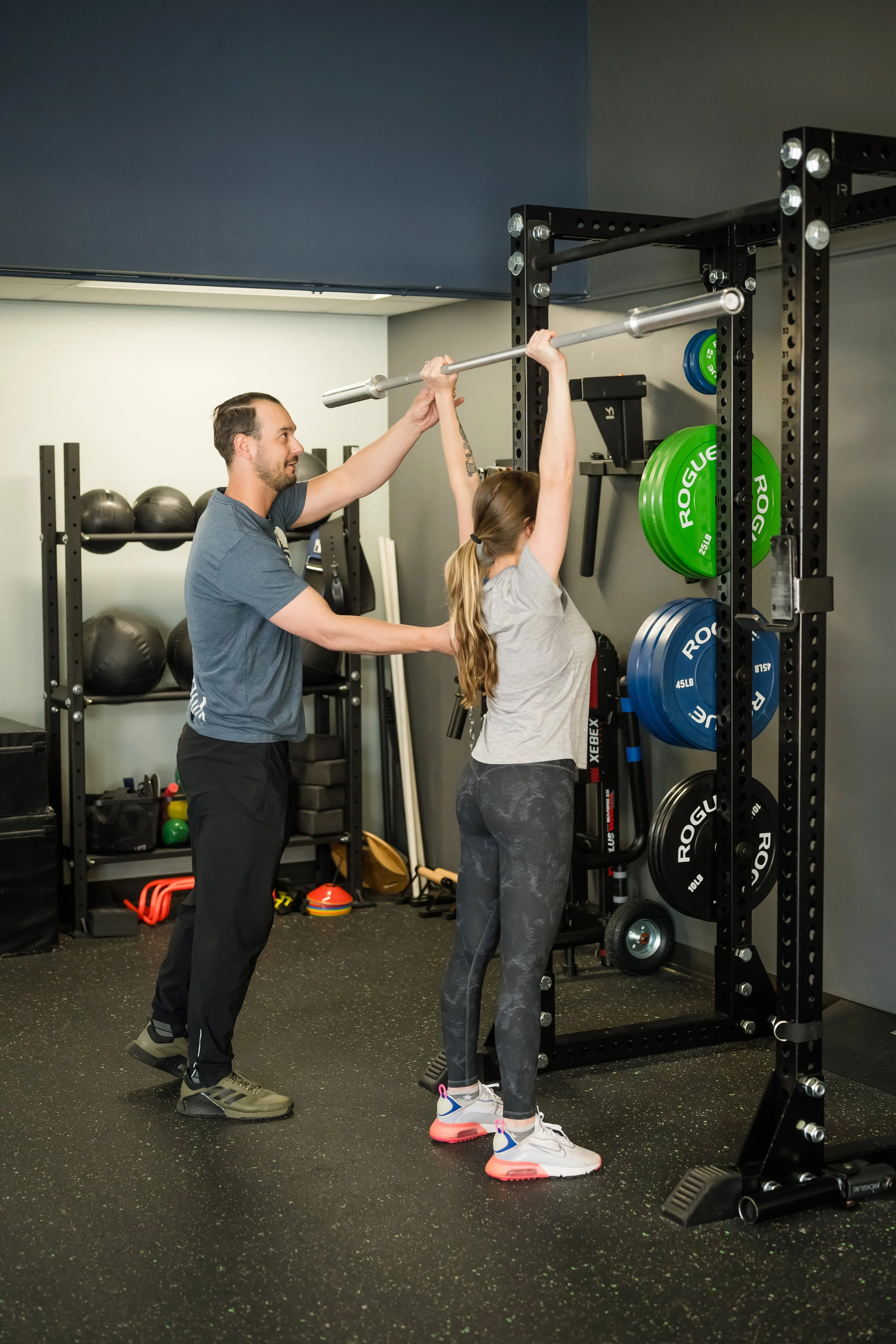
If you hurt your back and the deadlift is bothering you, can we start with staggered RDLs and build on them? or maybe you tweaked your knee and lunges are uncomfortable, does adding tempo into the movement change your pain response?
One of the best things about the people we work with is training and lifting is tied closely to their self identity. Psychologically being injured is one of the most difficult parts to negotiate. Emotionally it can take its toll, a lot of times even more so than the injury and pain itself.
How do we keep patients lifting and moving under the context of pain and symptoms to keep people active and strong?
2. Build Out Your Exercise Library
We want people still going to the gym. We want people to still train hard. Pain may in fact still be there, biology still may need to take its course. So what exercises are on your list that we can substitute, modify, or leverage in the time being?
This begins as maybe 1 or 2 movements but as things heal and improve, that library of choices should build and compound looking more like what hurt in the first place. If you hurt your shoulder overhead pressing, maybe we start with side presses, then landmines, and finally maybe a kneeling variation, all in the objective to get back to the original movement.
Knowing what you can tolerate at each stage allows us and you to not miss a beat and train hard even when you're in pain.
3. What Buckets Need to be Filled? Which Ones Need to Stay Filled?
There’s usually a reason why you got hurt. Was it a programming issue? Lacking strength in a specific muscle group? Stiff in a specific region that forces you to move a certain way?
We need to find out what buckets you need to fill so that when you are fully training again that this becomes a singular occurrence and not a repetitive cycle.
At the same time, what buckets are already filled? Can we leverage what you do well to keep training at a high level? This is one of the biggest reasons we want to keep you training. We don’t want to become weaker from unnecessary rest and rather leverage what you already do well so that your comeback is better than before your injury.
I say it all the time, “Give people more strengths.”
Before even attending the course, I spent a lot of my career answering the same question, am I a physical therapist or a trainer.
I believe keeping people moving and movement based solutions not only create better adaptations, but provide an environment that is self-advocating and self-empowering.
I was grateful to not only take the course myself but share it with my friend Ashton and teammate Katie.
I write this not only for myself and reflecting on the past weekend, but for anyone else that feels like the black sheep in their world. There are others pushing the same mission and while many days can feel alone, you’re not. Your tribe, your people, and a deeper connection to what you love exists, sometimes it just takes a little more time than what you may like to find them.
Helping athletes RESOLVE THEIR PAIN by CLEARLY DEFINING THE PROBLEM and IMPLEMENTING EFFECTIVE SOLUTIONS to get them back doing the activities they love!
If you are currently struggling with an injury or unable to perform in the activities you enjoy. Please follow the link to schedule a consultation call to discuss how we can help you.