Returning to Sport & High-Level Performance After Surgery
Every return-to-sport timeline depends on the individual and their goals, the specific procedure, surgeon protocol, and how the body responds to rehab. There's no universal framework that fits every knee, back, shoulder, hip, or ankle, but there are a few specific, trackable considerations that hold true for each region.
Here are our top considerations in post-surgical care to facilitate a successful recovery from early rehabilitation to high-level performance.
Shoulder Surgery Considerations
Tissue healing has a biological clock - after rotator cuff or labral repairs, the tendon or labrum needs time to actually reattach to bone, typically up to 12 - 16 weeks. That brace that you were recommended in the beginning, while may not be doing much to prevent you from swinging your arm all over the place, does serve as a very helpful reminder that the most vulnerable time period is in the early stages.
Scapular control comes before overhead strength - ever seen someone try and lift their arm but can’t help but shrug their shoulder at the same time? Before progressing to overhead or throwing activity, we need to facilitate proper scapulothoracic rhythm which in turn allows us to properly stabilize for higher intensities and resistances.
Rebuilding deltoid and chest strength can be the hardest part - typically people do really well at rebuilding the necessary rotator cuff strength for proper stabilization, however, the delts and chest take a big hit when it comes to atrophy after surgery. This is because its more tolerable to push intensity on pulling exercises than pressing movements from a pain and sensitivity standpoint early on.
Knee Surgery Considerations
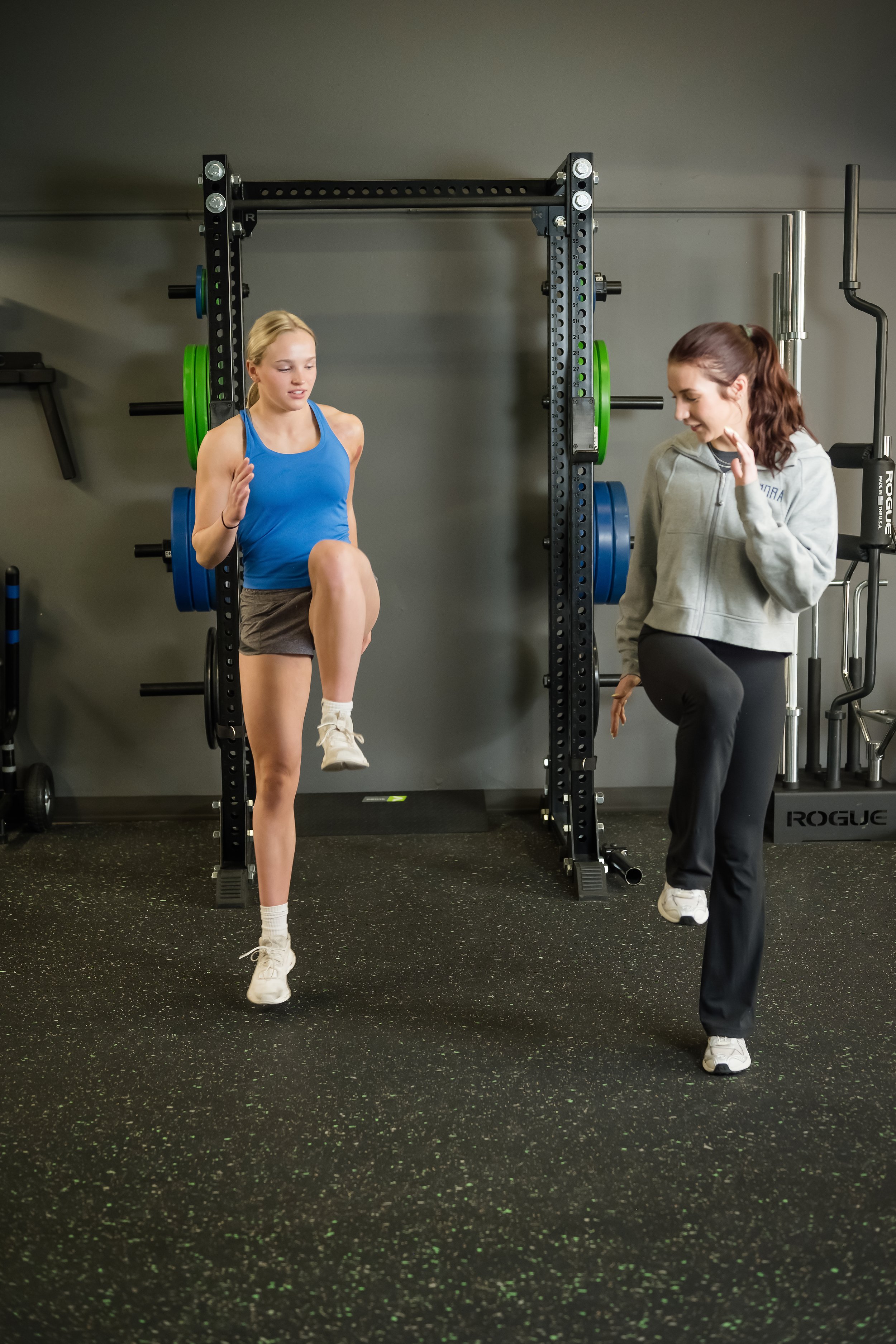
Quiet Knee - the concept of a “quiet knee” focuses around controlled management of inflammation and swelling post-operatively in the decision making model for progression to higher intensity movements and exercise. It gives us an indication of how irritable the knee joint is that given day. The presentation of a “quiet knee” plays a major role in the decision to start a return to run program and more intense jumping movements.
Shin and trunk angles matter - knees are very good at developing what we call “learned disuse” where our body actively avoids using the knee in a given movement pattern. This is where shin and trunk angles come into play. They give an indication that we are actively using our knee in an exercise, properly targeting and strengthening the thigh, and setting us up for a proper return to sport and recovery.
Hop testing and landing mechanics - Single-leg hop tests (for distance, height, and side-to-side) are great indicators as to whether the knee can absorb force safely, not just whether it can generate it. Poor landing mechanics are typically associated with strong predictors of re-injury even when strength numbers look fine.
Back Surgery Considerations
What actually is core strength? - when we define core strength, usually someone is referring to our abominables in the front. In back surgery, it becomes ultra critical to not only strengthen everything in the front but also around. From the obliques to the erectors. These muscles are commonly overlooked in the recovery from back surgery.
Tissues and trauma - bones heal different than muscles, heal different than ligaments, heal different than…… you get it. A microdiscectomy and a spinal fusion have very different healing timelines. On top of that, each small clean up portion of your surgery is trauma in its own way. While certainly appropriate, at the end of the day, returning to high level sports and performance all these things need to be a part of the timing and decision making process.
Load tolerance has to be built in stages. Before returning to contact or high-impact sport, the spine needs to tolerate axial loading (like squatting or running impact) and rotation (like swinging or throwing) independently before combining them. Skipping straight to full-speed rotational movements and other related decisions, comes with its own consequences.
Ankle and Foot Surgery Considerations
Calves are the most underloaded muscle in rehab - your calf muscles, made up of the gastrocnemius and your soleus, are some of the largest muscle groups of the body. Most people stop at calf raises at the wall. We need heavy, loaded variations to get back to high-level sports and performance.
Dorsiflexion range of motion can be a gatekeeper- outside of achilles repairs, where we actually let this stiffen up a bit to promote healing of the tendon, limited ankle dorsiflexion (the ability to bring your shin toward your toes) can restrict your ability to squat, cut, and absorb landing forces. It's a small measurement that has an outsized effect on performance down the line.
Build the springs back in - getting your bounce back after ankle or foot surgery is more than just calf work. We need to train something called ground contact time (GCT) to facilitate getting springy and bouncy again. This then translates to feeling confident accelerating/decelerating and finally changing of direction.
Hip Surgery Considerations
The hard part is usually at the beginning - no matter if it's a total hip, labral reconstruction, glute medius repair, you name it. They typically come with a brace, precautions, and an initial chill out period. Patience in the early phase can be challenging but letting tissues properly heal sets the table to work hard down the line.
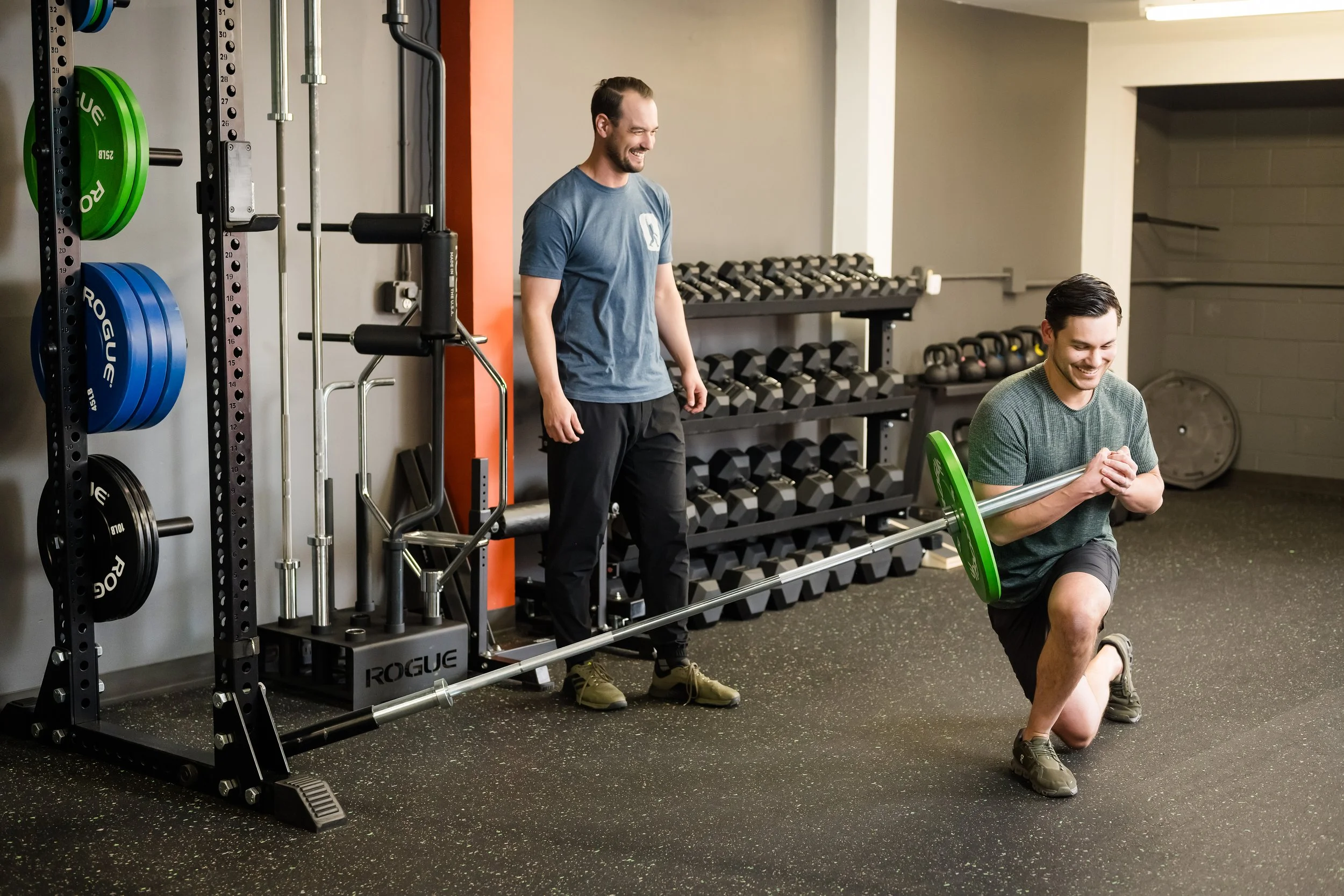
Don’t be scared of hip flexion - the hip flexors get a bad rap for being a large pain generator in a lot of hip diagnoses, this is especially true in the rehabilitation of labral tears. While I don’t disagree that we need to be considerate in the early phases of hip surgery, once those tissues are healed, it's time to get after it. Hip flexor strength is critical for sprinting, change of direction, and gross stability.
Don’t skip out on your groin muscles - most people emphasize and prioritize the lateral muscles of the hip, and they should because they’re important too. But our groin musculature, or the hip adductors are heavily correlated directly sprinting, squatting, and gross hip stabilization and shouldn’t be overlooked.
Each joint and surgery has their own specific considerations and checkpoints associated with them. If you’re a high-level performer or athlete returning to sport, working with a team that understands each thoroughly can be critical to where you want to go and end up at the end of your recovery.
Know exactly where you stand every step of the way, and build a specific plan that gets you back safely, on your timeline, and your goals.
Key TakeAways:
Healing follows the tissue, not the calendar. Bone, tendon, ligament, and muscle each heal on different timelines, and even within the same surgery (a microdiscectomy vs. a fusion, a rotator cuff repair vs. a labral repair) the timeline shifts. "Return to sport" can't be based on a generic number of weeks, it has to be based on what's actually healing.
Readiness has specific, trackable markers — not just "no pain." A quiet knee, proper scapulothoracic rhythm, staged spinal load tolerance, ankle dorsiflexion, hip flexor and adductor strength, each joint has its own checkpoints that need to be objectively assessed rather than assumed once pain resolves.
The unglamorous early phase protects the high-level phase later. Patience with precautions, bracing, and protected loading early on isn't wasted time, it's what allows athletes to push hard toward true performance later without setbacks, re-injury, or having to backtrack.
Helping athletes RESOLVE THEIR PAIN by CLEARLY DEFINING THE PROBLEM and IMPLEMENTING EFFECTIVE SOLUTIONS to get them back doing the activities they love!
If you are currently struggling with an injury or unable to perform in the activities you enjoy. Please follow the link to schedule a consultation call to discuss how we can help you.