Return-to-Ski Testing: Are You Actually Ready to Go Back?
You feel better.
Your swelling is down.
You’re lifting again.
But are you actually ready to ski?
This question matters more than most people realize because “feels good” and “ready for the mountain” are two very different things.
Skiing isn’t going on a brisk walk. It’s high-speed deceleration, unpredictable terrain, edge control, rotation, and fatigue layered on top of it. If you’ve had a knee, hip, ankle, or back injury this season, returning without proper testing isn’t just risky, it’s guessing.
And guessing on snow can have consequences.
We often hear many things in the clinic, “It’s been 6 weeks,” “My surgeon cleared me,” or maybe “It doesn’t even hurt anymore.”
Those all have significance, but none of them measure whether your body can absorb force at high speeds, control rotation under load, decelerate on one leg, react to unexpected terrain, or tolerate fatigue over multiple runs. Skiing demands strength + power + control…. in constantly adapting and changing conditions.
Return-to-ski testing bridges that gap.
Here’s what we look for in clearing someone for return-to-ski in physical therapy:
1) Can you own single leg strength?
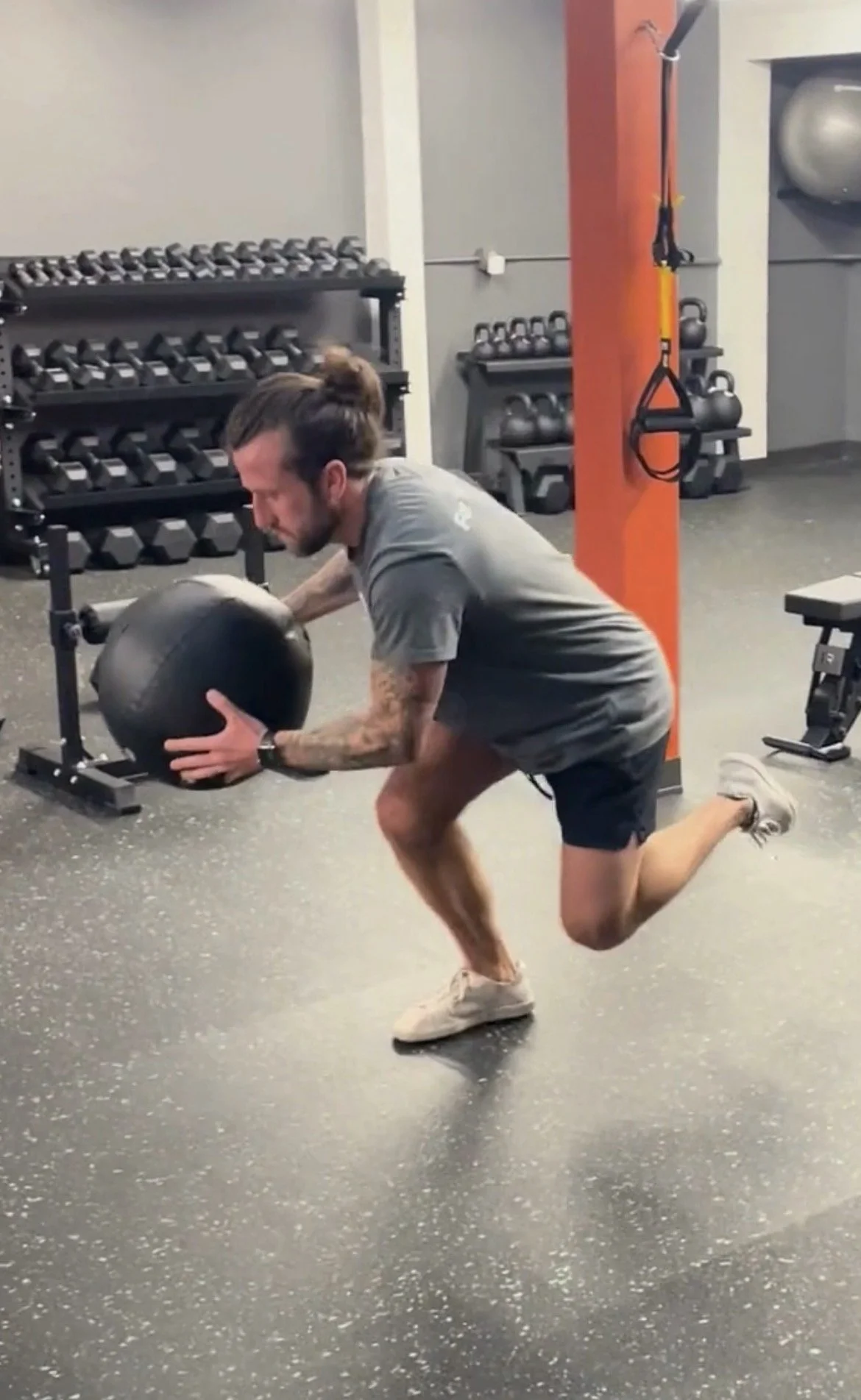
Skiing is essentially alternating single-leg deceleration.
We assess:
Single-leg strength symmetry
Single-leg squat control
Lateral step-down quality
Single-leg hop mechanics
If one side is compensating, collapsing, or hesitant we need to tease this out, because you don’t want to be on your first run down a mountain and find out.
2) Can you decelerate?
Most ski injuries happen during deceleration and changing direction.
We test:
Lateral hop and stick
Forward hop and stick
Multi-directional landing positions
Depth drop control
Repeated hop testing
Jumping high is important but if we can’t slow down, we can’t use it. If we can’t control landing and decelerating in the clinic, it won’t magically happen on a chopped-up blue run.
3) Can you tolerate rotation and pivoting?
Skiing involves rotational forces through the knee and hip, especially in changing direction and fighting G’s down the slope.
We assess:
Pivot control
Trunk stability during rotation
Reactive drills
Poor rotational control is one of the major risk factors for ACL and meniscus injuries.
If you’ve had an injury this season and you’re wondering whether you’re truly ready to get back out there, we can help you test it….. objectively.
Because in Colorado, especially this season, the ski season is too short to guess.
Helping athletes RESOLVE THEIR PAIN by CLEARLY DEFINING THE PROBLEM and IMPLEMENTING EFFECTIVE SOLUTIONS to get them back doing the activities they love!
If you are currently struggling with an injury or unable to perform in the activities you enjoy. Please follow the link to schedule a consultation call to discuss how we can help you.