Being in PT Shouldn’t Stop You From Training – It Should Take You Further
My favorite part of being a physical therapist at Tundra Performance and Physical Therapy is that I get to work with an incredible population of high-performing outdoor athletes, weightlifters, and active adults. Specializing in this population means that my days are always exciting, challenging, and different.
Working with different types of athletes means working with a variety of different injuries, training for a variety of different athletic reasons. Oftentimes, my patients’ goals include more than sleeping better and putting dishes away – the progression doesn’t stop there. My patients are trying to get back to things like heavy overhead squats, change of direction sports, IronMan races, or Hyrox races. As performance physical therapists, we have to make sure the rehab matches these high levels of performance.
SHOULD I STOP TRAINING?
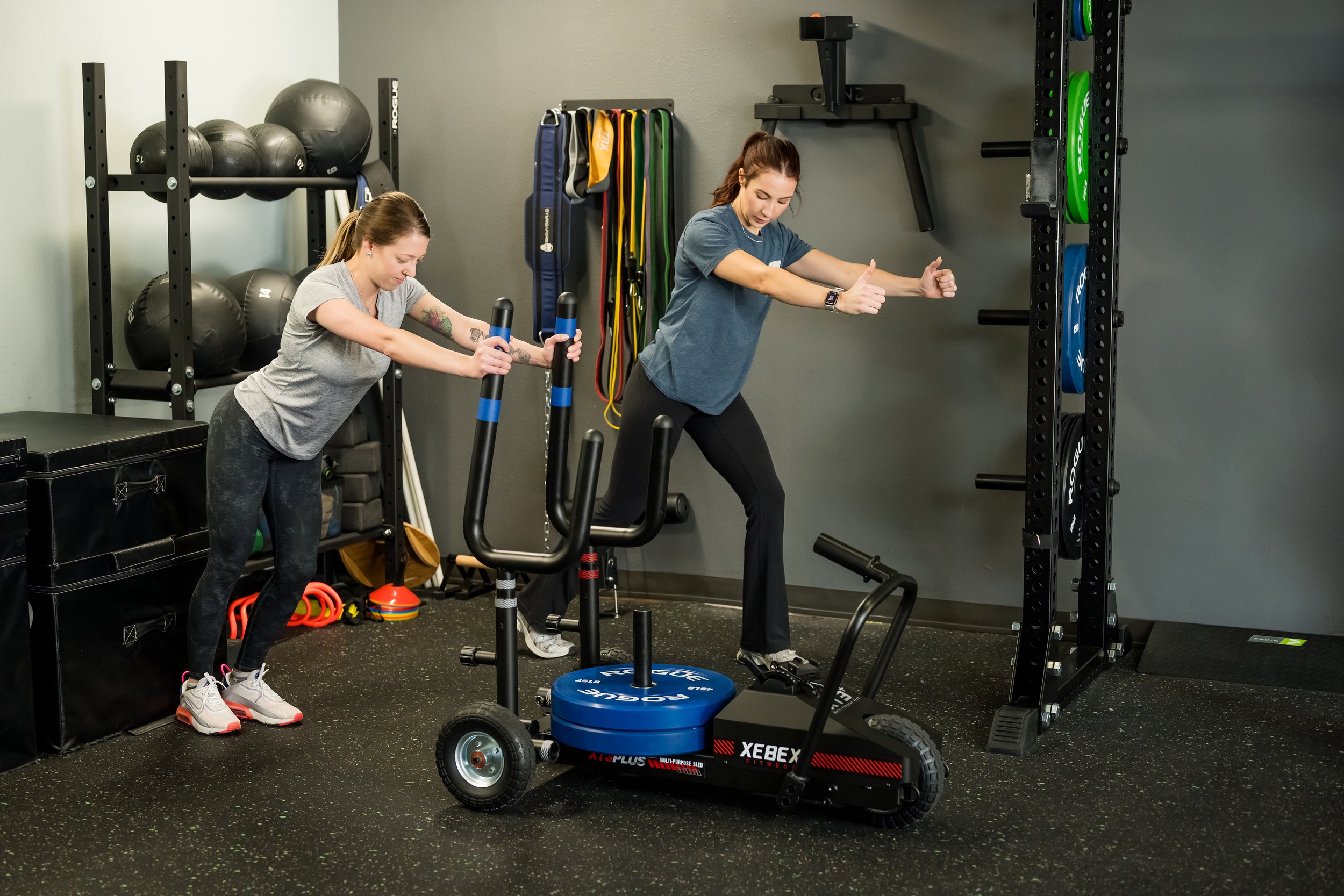
One of the first questions active patients ask is:
"Should I stop training until this gets better?"
Maybe it's a runner with knee pain asking if they should stop running, or a lifter wondering whether shoulder pain means they should stop pressing overhead.
There are situations where complete rest is appropriate, such as certain acute injuries or concussions, but they're less common than many people think.
For many orthopedic injuries, the goal shouldn’t be to stop training altogether. It should be to keep that athlete moving as much as possible while being considerate to safety and the needs of recovery.
Staying active helps maintain strength, conditioning, and confidence throughout recovery. Just as importantly, it prevents athletes from losing months of fitness while waiting for one body part to feel better.
Good sports physical therapy not only gets an athlete out of pain. It also provides guidance for athletes to continue training safely, maintain general fitness, and progressively build back toward the demands of their sport.
HOW DO WE MANAGE BOTH REHAB & TRAINING?
The early stage of rehab should be specific to the injury. Let’s use a volleyball player with shoulder pain as an example.
Initially, we'll focus on restoring shoulder mobility, strength, and function because that's what needs the most attention. But if their shoulder only becomes painful after two hours of practice, I don't necessarily want them to stop playing altogether. Instead, we'll adjust their training volume or intensity so they can continue practicing without significantly increasing symptoms.
At the same time, there's no reason for them to stop building lower-body strength, conditioning, or other aspects of performance if those activities don't aggravate the shoulder. Some exercises may need to be modified, but modification doesn't mean complete inactivity.
If we stop all training, the shoulder won’t be the only limiting factor when it’s time to return to playing. At that point, they’re not only working back into using the shoulder again, but also rebuilding their fitness completely.
As pain and tolerance to movement improves, our goals within rehab shift from restoring basic function of a specific body part to preparing the whole athlete for the demands of their sport.
That means progressing beyond isolated exercises to incorporating full-body movements, power, speed, coordination, and conditioning. An overhead athlete needs to throw, press, and hit at game intensity. A soccer player needs to sprint, cut, accelerate, and change direction repeatedly. A runner needs to tolerate the mileage and intensity required for their event.
Many athletes are discharged from rehabilitation long before they ever practice at an intensity level that their sport or activity requires. This is why many people feel “PT didn’t work.” I’m not sending a soccer player out into the world after they’ve jogged 1 mile slowly. They’re cleared when they can cut, sprint, and change directions at high speeds repetitively, safely, and without pain or limitation. I’m not sending an overhead athlete back to baseball or volleyball once they can hit a few times in the clinic. They’re cleared when they can demonstrate those movements at full intensity, under fatigue, in unpredictable conditions. Because that’s how sports work.
INTEGRATING REHAB, STRENGTH, & PERFORMANCE
When working towards return to sport (or any athletic activity), the rehab process is more like a spectrum than a staircase.
Early on, rehab is more specific while we maintain as much overall fitness as possible. That often means temporarily modifying or reducing activities that exceed the body's current capacity.
As healing progresses, rehab becomes less about isolated exercises and more about integrating movement patterns, strength training, conditioning, and sport-specific performance.
The goal isn't simply returning athletes to where they were before the injury.
The goal is to help them come back stronger, more resilient, and better prepared than before.
If you're training for something and aren't sure what to modify, or you've already completed physical therapy but still don't feel ready to perform at your previous level, we can help bridge that gap.
Key Takeaways:
The goal during rehab is to maintain as much strength, fitness, and conditioning as safely possible.
Early rehab should be specific to the injury to address symptoms and improve function.
As symptoms improve, rehab should transition towards improving overall performance.
Returning to sport means being prepared for the actual demands of your activity, not just being pain-free in the clinic.
Great physical therapy doesn't just get you back to your sport. It helps you return stronger, more confident, and better prepared than before.
Helping athletes RESOLVE THEIR PAIN by CLEARLY DEFINING THE PROBLEM and IMPLEMENTING EFFECTIVE SOLUTIONS to get them back doing the activities they love!
If you are currently struggling with an injury or unable to perform in the activities you enjoy. Please follow the link to schedule a consultation call to discuss how we can help you.