A Performance Physical Therapist’s Roadmap for Disc Herniations For Denver Athletes
Disc herniations don't have to mean the end to the activities you love. If you've been told you have a herniated disc, you've probably also been told to rest, avoid bending and twisting, and be patient.
That advice isn't wrong, exactly, it's just not (A) a complete answer to how to actually get back and (B) it doesn’t acknowledge the demands athletes face in returning to the sports they enjoy.
For athletes and active people, the goal isn't just to calm things down. It's to rebuild the capacity to move, strengthen, and compete again without fear.
Here's what a proper rehab roadmap for our patients and athletes looks like.
FIRST: before we dive in, we need to acknowledge, a herniated disc is not a life sentence.
Disc herniations sound catastrophic, but they're far more common, and far more manageable, than most people think. Studies on athletes with lumbar disc herniations show that up to 90% return to sport without surgery when they follow a structured, progressive rehab program. The disc itself isn't fragile glass; it's a resilient structure that responds well to the right kind of loading and progressive exercise over time.
The mistake most people make is treating an MRI finding as the whole story. Plenty of people walk around with disc herniations on imaging and no pain at all.
TO BE CLEAR: Disc herniations can still be painful, can still cause debilitation, and can still disrupt being able to participate in the activities you enjoy.
What matters though is how you move, how your spine tolerates load, and whether your rehab actually addresses the mechanics and situation that got you here in the first place.
Phase 1: Calm SHIT down, Don’t Shut it Down
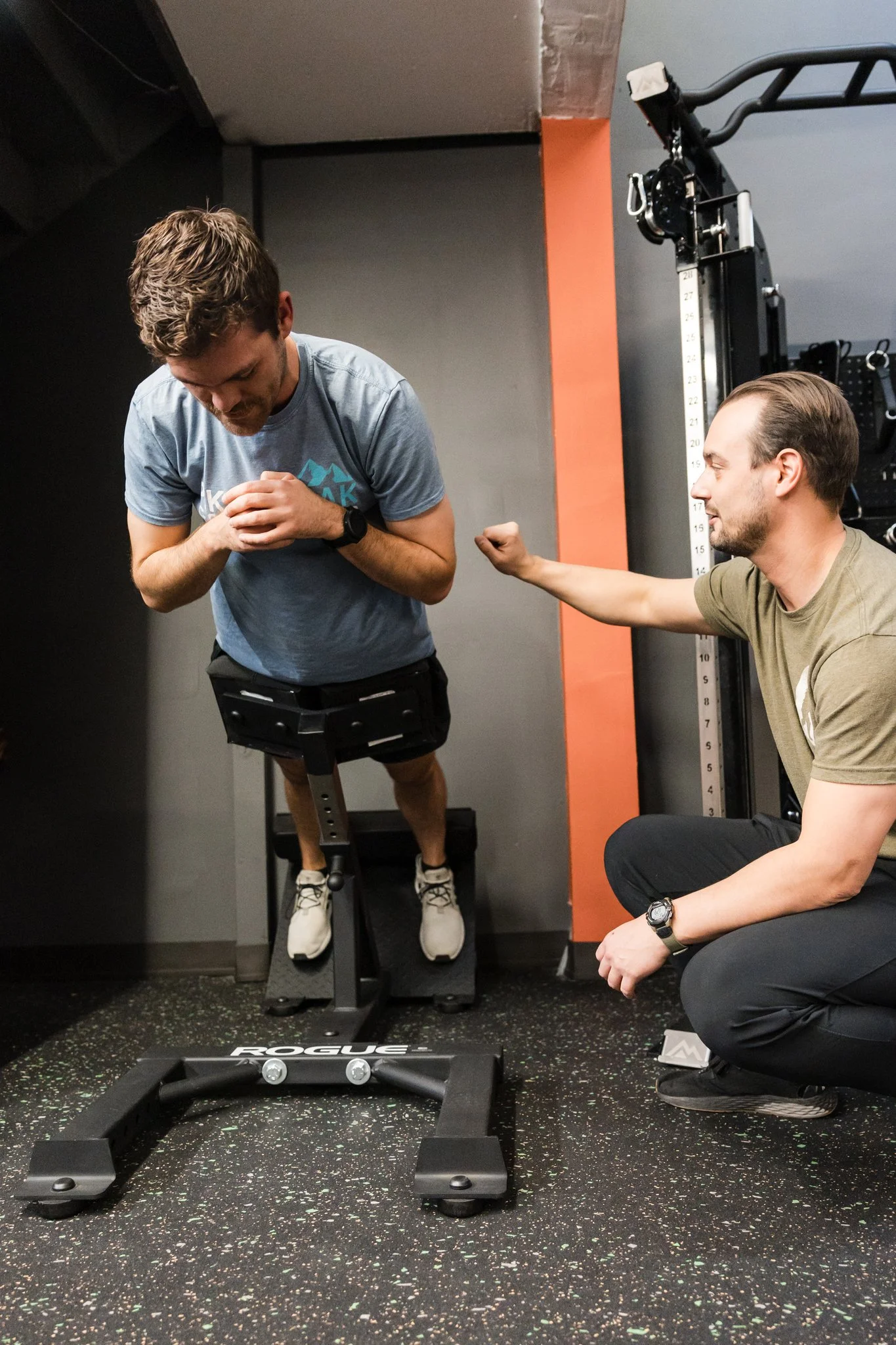
Early on, the priority is reducing irritation to the nerve and disc without going full bed rest. Total inactivity weakens the muscles that support your spine and delays recovery. Instead, this early phase focuses on:
Finding positions and movements that reduce symptoms: most commonly recommended is extension-based work, but where discs specifically herniate is highly individual. We need to prioritize movements that REDUCE symptoms versus making choices solely on direction.
Restore motion and re-activation of the trunk and core stabilizing muscles: think less about trying to strengthen specific muscles, and more trying to convince the spine that it’s ok to move again
Walking and low-grade cardio: to keep blood flow moving and muscles working
This phase is short by design. The goal is symptom control and management, not permanent movement avoidance.
Phase 2: Load it up like an athlete
Once symptoms settle, rehab shifts towards building proper trunk and lower body strength. In doing so, we not only provide an environment where your disc has the propensity to actually return to its original form, but long term this protects our spine from future occurrences.
This is where a lot of generic rehab programs fall short.
They either stop at "the pain is gone" or don’t build enough strength for the long haul.
This is the phase that matters most for anyone returning to sport or serious training. Your spine needs to be exposed to progressively heavier, faster, and sport specific demands in a controlled way before you ask it to do that under more rigorous conditions.
That means graded exposure to heavier deadlift patterns, rotational medicine ball work, plyometrics, and sport-specific positions and movements. Rushing this phase is the single biggest reason people re-injure the same disc.
Phase 3: Returning to your sport with a plan
Clearing someone to return to sport shouldn't come down to a single strength test in the clinic. It should confirm you can actually tolerate the volume, speed, and positions your sport demands. Lifting, jumping, cutting, whatever it may be and applies to you.
What Separates Good Sports Rehab That Works, FROM Rehab That Stalls
Restoring movement based on symptoms rather than a direction: to reiterate, disc herniations and where they are herniated are individual. Some respond well to flexion-based movements, others extension, and you know what, some even like side bending. We need to choose exercises based upon symptoms, not just a generic pre-selected direction.
Progressive loading beats prolonged rest: the disc and surrounding tissues adapt to load; they don't heal from avoidance. This means not only re-introducing deadlifts and squats back into the plan, but also pushing those lifts as hard as you want to go after being discharged.
Don't stop at "the pain is gone": strengthen for the long haul. Prepare your body for what’s ahead. Maybe it's lifting heavy, ultramarathons, or maybe you just want to be active again.
A disc herniation is a setback, not a self-identity. With the right approach, and patience through each stage, athletes can get back to full training, competition, and feeling like themselves again doing the sports and activities they love.
Have questions about your own recovery timeline? Reach out to our team for a movement assessment where we can help you build a plan that gets you back to full training.
Helping athletes RESOLVE THEIR PAIN by CLEARLY DEFINING THE PROBLEM and IMPLEMENTING EFFECTIVE SOLUTIONS to get them back doing the activities they love!
If you are currently struggling with an injury or unable to perform in the activities you enjoy. Please follow the link to schedule a consultation call to discuss how we can help you.