The Secret Weapon in Your Rehab Program for Denver Athletes
If you've been in pain, coming back from an injury, or just trying to build strength that actually holds up under load, you've probably heard us talk about "tempo" in your sessions. It's not just PT-speak, controlling the speed of a lift is one of the most useful tools we have for both rehab and performance.
Tempo refers to how fast (or slow) each phase of a lift happens. We write it as a sequence of numbers, like 3-1-2-1: three seconds lowering the weight (eccentric), one second pause at the bottom, two seconds lifting it (concentric), one second pause at the top. Change those numbers and you change what the lift is actually training.
Here's why we build tempo work into so many of our rehab and performance programs.
It rebuilds sensitive tissue that took a hit.
Controlled eccentrics (the lowering phase) are one of the most evidence-backed tools for building tendon resilience, which is exactly why you'll see it in almost every rehab protocol for tendinopathy, from Achilles issues to tennis elbow to patellar pain.
This is because during a muscle contraction, there’s water that squeezes out of the tendon as part of the contraction. Do this too quickly with an acute sensitive tendon, BOOM, hurts like a mother fucker. Do this slowly and all those tissues have more time to acclimate to the load and the movement being demonstrated.
Over time, as sensitivity decreases, we can increase the load of the task, thus creating an environment that not only tolerates but creates remodeling of the injured tissue.
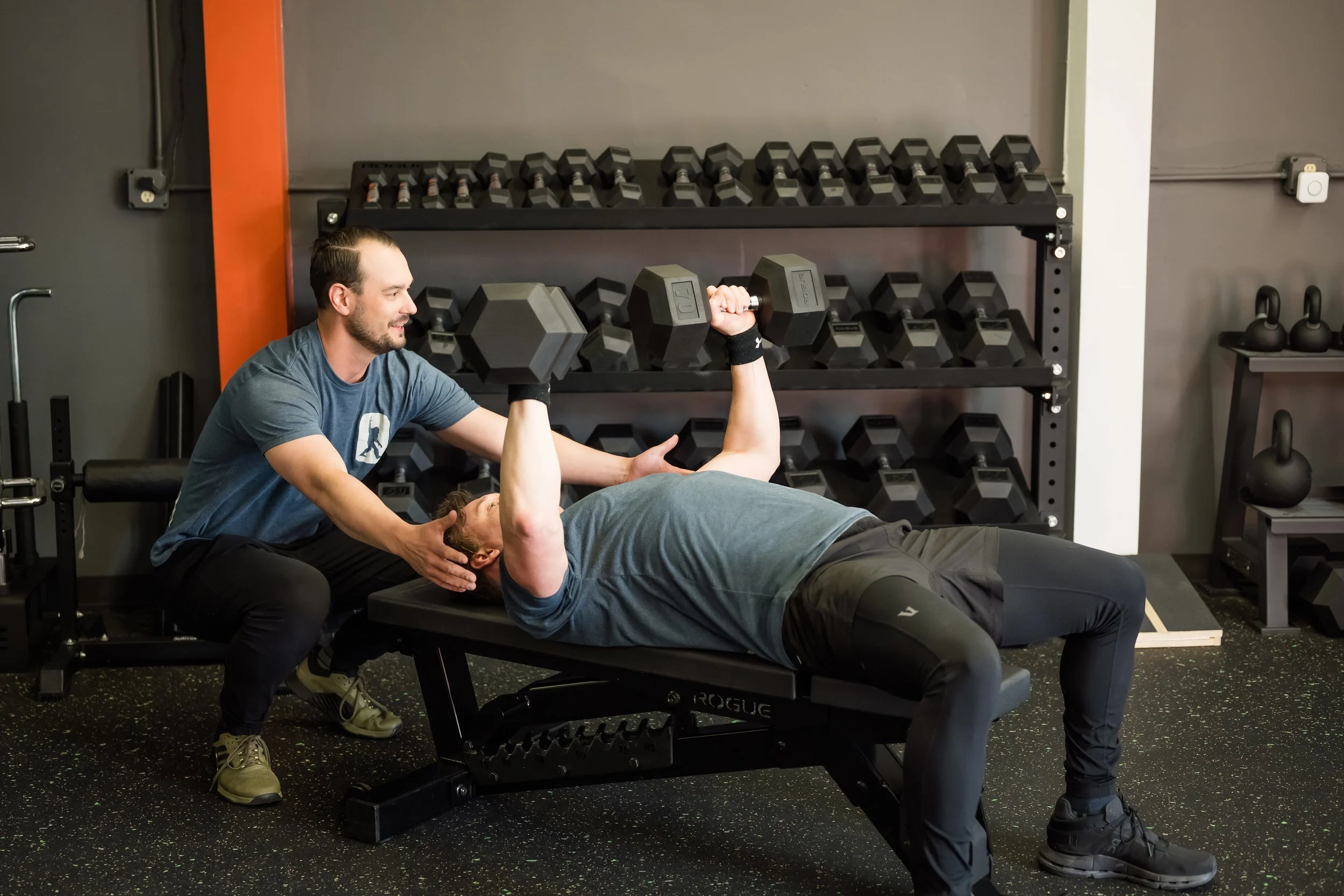
We can attack specific pain points and movement quality.
Whether it be performance or rehab, we can leverage tempo to spot (and attack) a hip shift, a collapsing knee, or a shrugging shoulder at specific points of the lift and movement. Easier to accomplish this when we can place pauses at sticky points or when the rep takes five seconds instead of one.
It builds real strength without beating up your joints.
Because tempo work limits how much weight you can actually move, you get a strong training stimulus at a lower absolute load. That's huge if you're managing joint pain, working around an injury, or just need a lighter week without losing your training effect. It's one of the best tools we have for staying consistent when your body needs a break from heavy loading, not a break from training.
One caveat.
Tempo work isn't meant to replace normal-speed, heavier training, it's a tool we cycle in for specific phases: early rehab, technique blocks, hypertrophy phases, or deload weeks. Once tissue capacity and movement quality are where we want them, we layer speed and heavier loads back in, because that's ultimately how you build the strength and power to return to sport or daily life without pain.
If you're currently working with one of our physical therapists, don't be surprised if you see tempo prescriptions in your program, now you know why. And if you've got a nagging ache or an old injury that's never quite felt right, tempo-based strength work is often a common place where we start.
Questions about your program or want us to take a look at something that's bothering you? Reply to this email or book a visit, we're happy to help!
Key Takeaways
Slow eccentrics let sensitive tendons acclimate to load instead of getting overwhelmed by it, which is why controlled lowering is a staple in almost every tendinopathy rehab protocol.
Slowing a rep down exposes and fixes movement faults (hip shift, knee collapse, shoulder shrug) that speed and momentum let you hide.
Tempo work delivers strength, hypertrophy, and better mind-muscle connection at a lower joint load, making it a go-to tool for rehab phases and deload weeks, not a permanent replacement for heavier training.
Helping athletes RESOLVE THEIR PAIN by CLEARLY DEFINING THE PROBLEM and IMPLEMENTING EFFECTIVE SOLUTIONS to get them back doing the activities they love!
If you are currently struggling with an injury or unable to perform in the activities you enjoy. Please follow the link to schedule a consultation call to discuss how we can help you.