The Bench Press: Feet Up or Feet Down
Everyone who works with me knows, I don’t like fear based decisions.
Logical, pragmatic decisions sure, but certainly not fear based.
Fear based decisions create absolutes and at the end of the day, what works for someone may not necessarily be the answer for the next.
This past week, on a few occasions working with my patients I landed on the conversation of feet up or feet down when bench pressing. Now in the context of a physical therapy clinic, the generalization and potential history of back pain amongst our population skews to slightly higher, thus the consensus of these conversations was feet up to protect their backs.
I’m here to say, benching with your feet up certainly is an option and not necessarily incorrect, however, there are items to consider in the conversation. Let's dive into why you would want to put your feet down or up when it comes to a bench press.
Why would you want to bench press with your feet down?
In lifting, it always comes back to the same answer, tension. Placing our feet down and slightly back and underneath us, and in my opinion is the missing piece to this whole conversation, allows us to create better tension. Yes, our back goes into slight lumbar lordosis, but this also allows us to “set” our upper back and shoulder blades for a more stable press position for our shoulders.
More tension and more stability equates to greater strength output and will support the shoulder better long term under consistent heavier loading.
Now on the radical end of this conversation, we see competition bench pressers set into extreme lumbar lordosis whose goal is to press the heaviest weight they can and biomechanically shorten the distance the barbell has to travel during the lift. This by itself isn’t incorrect and serves their goals. There’s a lot of right answers here.
Do I think recreational lifters need this extreme of back bend to be successful, no. Do I think that a slight back bend can serve most people well, yes.
Who should bench press with feet down:
(1) Lifters with a history of shoulder injuries.
(2) Individuals looking for max strength output in their bench
Who shouldn’t bench press with feet down:
(1) Individuals with a history of low back pain who have demonstrated an intolerance to lumbar extension
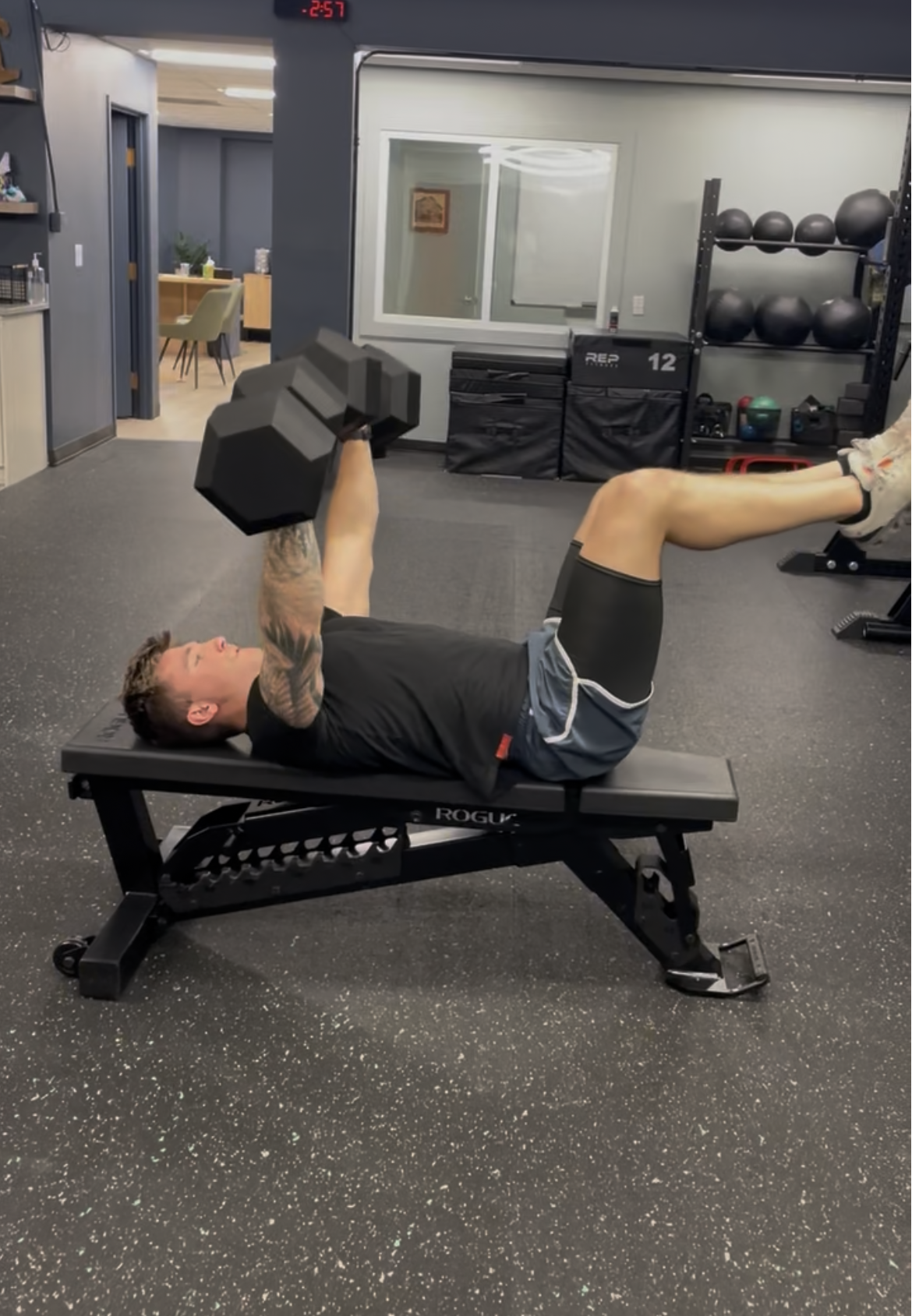
Why would you want to bench press with your feet up?
By pulling our feet up and placing them in the air, this inherently results in more trunk engagement and pec activity. If your goal is to put more focus on your pecs, this is the variation for you.
Now to clarify, just because there’s more activation, this does not mean a direct increase in strength. It just means the pecs are the primary emphasis for building. So if you’re body building, this might be the perfect fit.
We also see an increase in trunk engagement. We see a similar increase in trunk engagement when squatting on a bosu ball. But if your goal is to squat heavier, placing an unstable surface under our feet is not going to be the answer. It's the same effect here. By putting our feet up in the air, it will reduce the weight we can inherently press.
Again, not right or wrong, we just want to clarify what's the correct choice for your goals.
Who should bench press with feet up:
(1) Lifters looking for increased pec emphasis
(2) Individuals with a history of low back pain who have demonstrated an intolerance to lumbar extension
Who shouldn’t bench press with feet up:
(1) Individuals looking for max strength output in their bench
As always, there's a lot of right answers and it's all about what are your goals and is it serving you. For the average lifter, it's about selecting a variation that allows you to stay healthy long term.
If you couldn’t tease out from the framing, I am biased towards feet down because at the end of the day, our backs sit in a normal amount of lumbar lordosis as is, thus replicating the position in a bench press is possible for most everyone. Furthermore, I will always pick the variation with “more support” that puts lifters in more stable, comfortable positions that enable them to push more for increased strength.
If you have more questions or looking for more information on lifting technique related to your injury history, or potentially currently rehabbing an injury. Please feel free to reach out and set up a call where we can explore how we can help.
Helping athletes RESOLVE THEIR PAIN by CLEARLY DEFINING THE PROBLEM and IMPLEMENTING EFFECTIVE SOLUTIONS to get them back doing the activities they love!
If you are currently struggling with an injury or unable to perform in the activities you enjoy. Please follow the link to schedule a consultation call to discuss how we can help you.