Stop Protecting Your Back. Start Training It.
Whenever someone presents to our clinic with acute low back pain our first goal as physical therapists is to establish what is the irritability and acuity of the situation. In other words, how angry and pissed off are the tissues. From there we can start formulating a plan as to what the patient’s spine can tolerate in regards to exercise and intensity.
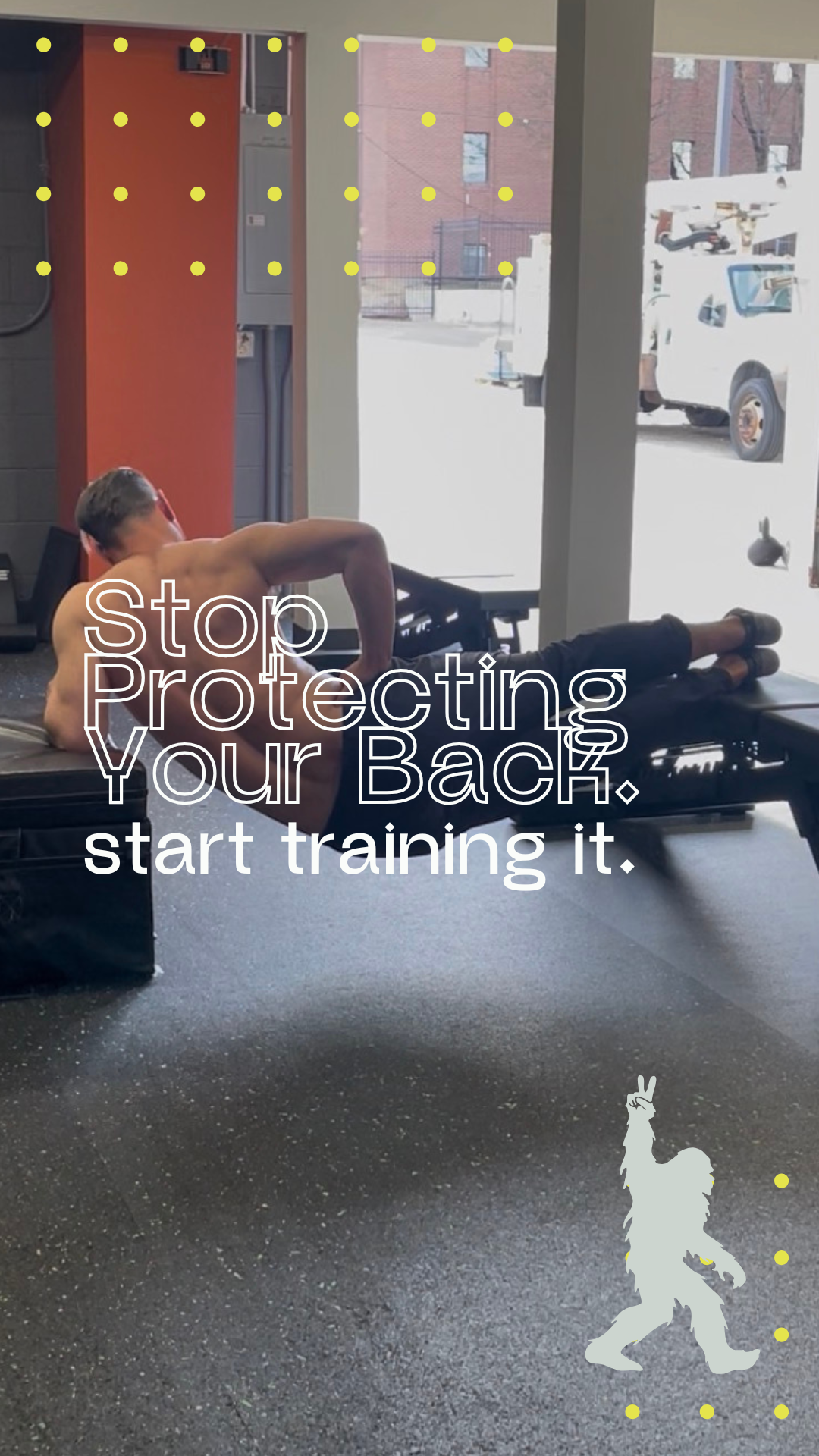
In a lot of acute low back pain cases, it can be quite painful to bend over or simply rollover in bed in the early phases of healing. One of the biggest predictors of a quicker recovery is re-establishing proper range of motion tolerance in the spine. Depending on how painful and irritable the tissues are, exercises like pallof presses and side planks become a great starting point for lateral trunk work.
These exercises bring blood flow to the injured area. We achieve some subtle movement and work in the injured spine. And we start reteaching the back that it's ok to move again.
But what comes next.
While these exercises are a great entry point back to training and moving painfree again, they lack one thing, they don’t actually train the spine through a full range of motion.
This is where a lot of back rehabs and chronic pain situations get hung up.
Pallof presses and side planks are safe. They’re protective. And people with chronic back pain like safe and protective. We stay in our lane, we know what “works,” and we stop training harder in the spine.
Here’s 4 exercises that we like to use as progressions for lateral trunk strengthening in treating low back pain: HERE!
Helping athletes RESOLVE THEIR PAIN by CLEARLY DEFINING THE PROBLEM and IMPLEMENTING EFFECTIVE SOLUTIONS to get them back doing the activities they love!
If you are currently struggling with an injury or unable to perform in the activities you enjoy. Please follow the link to schedule a consultation call to discuss how we can help you.