Why Your Achilles Tendinitis Isn't Getting Better
I think there’s a lot of people that rehab achilles tendinitis really well, but when I do treat runners that have tried and failed traditional physical therapy in the past, it usually comes down to one thing. They didn’t progress past isometrics.
The cycle looks the same. A runner comes in with achilles tendinopathy, they initially got better with isometrics, their pain dropped, and they feel like they're turning a corner. Then they tried to get back into running and they stalled. The tendon never actually got the load and adaptation it needed.
The most important part of the process was left on the table.
Why Isometrics Work and What They Can't Do
Isometric contractions are genuinely useful in the early stages of achilles tendinopathy. The research is clear: sustained isometric holds produce an analgesic effect through cortical pain inhibition, can reduce tendon pain acutely within a single session, and give us a way to load the tissue without provoking the reactive response you'd get from heavier dynamic work too early.
But here's the problem: isometrics don't build tendon stiffness the way heavy progressive loading does. They don't train the tendon through its full range. And they definitely don't prepare the tissue for the ballistic, energy-storing demands of running, and jumping.
The Gap We Need to Fill
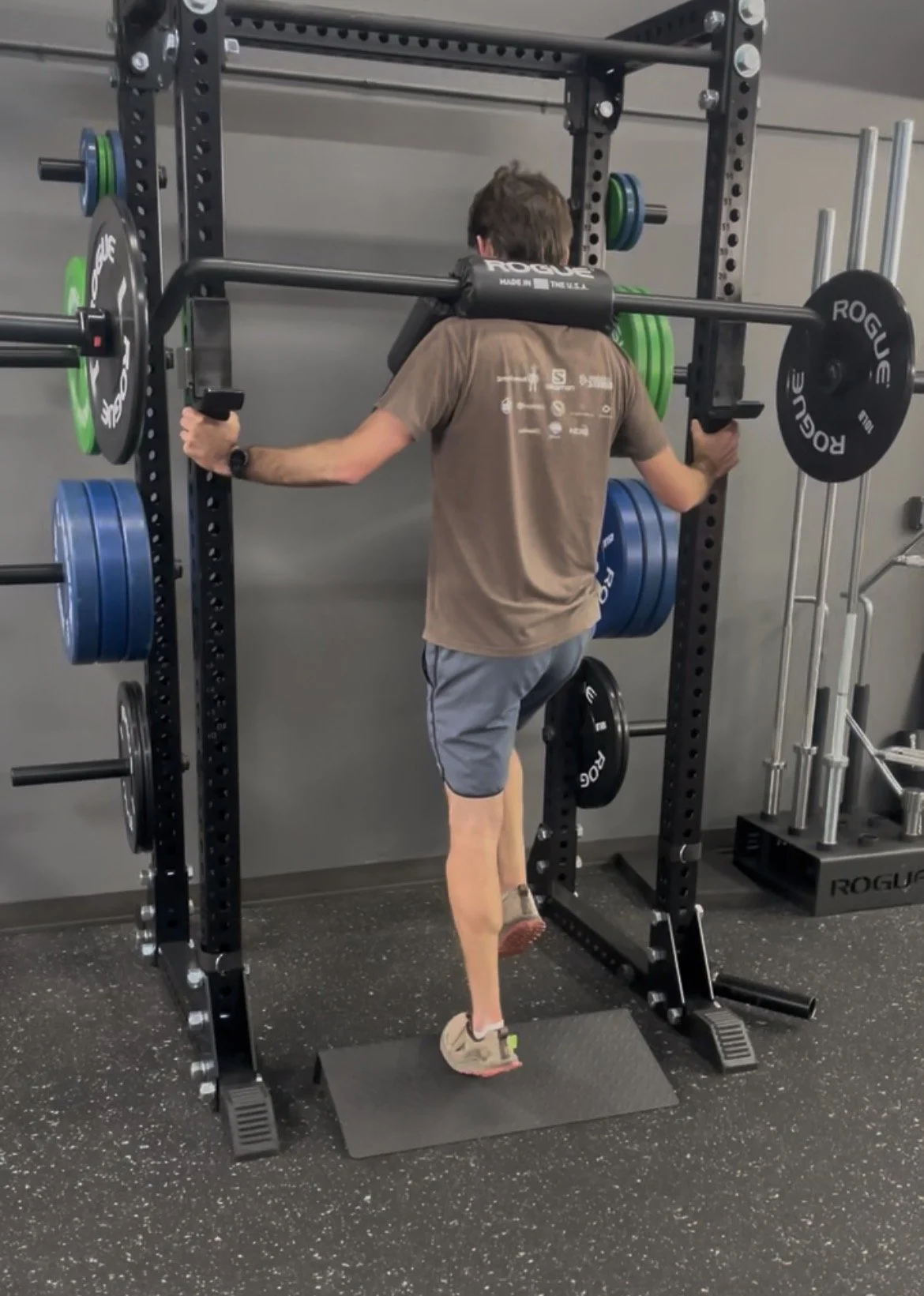
The jump from isometrics to return to run is where most achilles rehabs quietly fall apart. We use two primary tools to fill this gap: heavy slow resistance and supramaximal eccentrics.
Heavy slow resistance — think bilateral or unilateral calf raises with meaningful, heavier load. This is where tendon remodeling really starts to happen. The tendon responds to load magnitude and rate and we give it something worth adapting to.
Supramaximal eccentrics — if you aren’t familiar with eccentrics, we load the lowering phase beyond what the patient can concentrically lift. This exposes the tendon to forces it can't get any other way. This format rebuilds the stiffness, the energy storage capacity, and ultimately the resilience the tendon lost.
One consideration to remember when it comes to these tools versus isometrics, isometrics can be used daily due to the limited total workload on the tissue. However, heavy slow resistance reps and supramaximal eccentrics have the capacity to make muscles quite sore and needs to be considered when it comes to frequency and allocation.
How to Make the Transition
Pain behavior and response tells us when to make this shift. Once a patient’s pain and irritability is consistently responding well to isometrics without flaring both day of and the next day. It's time to start titrating some heavier work in.
We initially begin with some trial weights and open the door. Once we’ve stepped through we follow the game plan until we’ve matched the tissue demands of the sport they're returning to. Match this with the right return to run program and we take it to the finish line.
Isometrics are a beautiful tool and start the conversation. Heavy slow resistance and supramaximal eccentrics complete the picture.
If your achilles tendonitis is stuck in isometric purgatory, the tissue isn't the problem. The program is.
Load it. Progress it. Get back to the mountain and the trails.
Helping athletes RESOLVE THEIR PAIN by CLEARLY DEFINING THE PROBLEM and IMPLEMENTING EFFECTIVE SOLUTIONS to get them back doing the activities they love!
If you are currently struggling with an injury or unable to perform in the activities you enjoy. Please follow the link to schedule a consultation call to discuss how we can help you.