Blood Flow Restriction Therapy: The Rehab Tool That Keeps Denver Athletes Strong While Injured
If you’ve been in our clinic, you may have noticed a few patients working out with what looks like a blood pressure cuff strapped to their arm or leg. It’s not a medical mystery, or some crazy new phenomenon, it’s blood flow restriction (BFR) therapy. It’s one of the many tools we leverage in helping people build back strength during their recovery.
Some label it world changing. Others call it diabolical.
Its true form is somewhere in between.
What is Blood Flow Restriction Therapy?
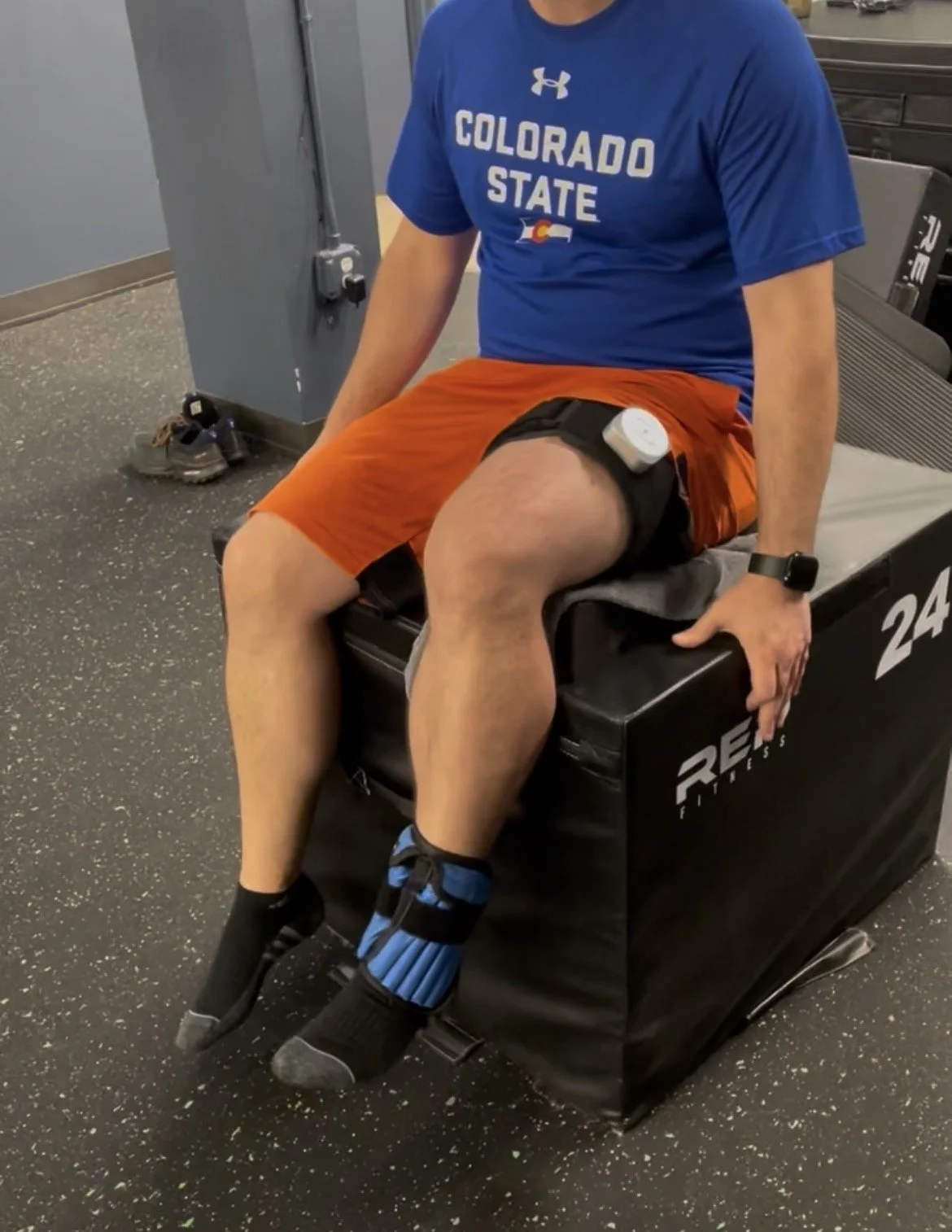
BFR training uses a specialized cuff placed around the upper arm or upper thigh to partially restrict venous blood flow (blood traveling back to the heart), while keeping arterial flow (blood going to the muscle) moving. The result is a metabolic environment in the muscle that mimics the stress of heavy lifting, even when you’re working with very lighter loads.
Normally, building meaningful muscle strength and size requires lifting at 70–85% of your maximum. With BFR, research shows you can trigger similar adaptations using just 20–30% of that max. That’s a big deal when you’re dealing with pain, post-surgical restrictions, or sensitive tissue that can’t handle heavy load yet.
How Does It Work?
When blood pools in the working muscle, a few things happen that accelerate strength and hypertrophy gains:
Metabolic stress builds up quickly, triggering muscle-building hormones like growth hormone and IGF-1.
Fast-twitch muscle fibers get recruited earlier than they normally would at low loads.
Muscle protein synthesis ramps up, the same process triggered by heavy resistance training.
The end result: your muscles get a high-intensity training stimulus at a fraction of the joint stress.
Who Benefits Most?
Post-surgical rehab — After procedures like ACL reconstruction, meniscus repair, or rotator cuff surgery, joint loading is managed to allow proper anchoring and healing of tissues. BFR lets patients maintain and rebuild muscle during windows where they are either non-weightbearing or unable to perform heavier loading early on.
Chronic pain conditions — Patients with persistent tendinopathy who struggle or sensitive to higher stresses, can still make meaningful strength gains while keeping intensity elevated. We reap remodeling benefits while keeping pain managed.
Stress fractures or bone stress injuries — During time periods where impact and compressive load must be minimized, BFR allows us to continue training and provide strength stimuli not replicable through traditional avenues.
Athletes returning to sport — We leverage BFR to close strength gaps quickly and safely while managing full-load training resumes. We can help athletes with soft tissue healing while managing high workloads.
Is It Safe?
Yes — when applied correctly. BFR is not the same as cutting off circulation. The cuff pressure is calibrated to each person’s limb and vasculature using a standardized protocol. It’s not appropriate for everyone (those with clotting disorders, active DVT, or certain cardiovascular conditions are excluded), which is exactly why it should be used under the guidance of a trained clinician. In the right hands, the safety profile is well-supported by the research.
What Does a BFR Session Look Like?
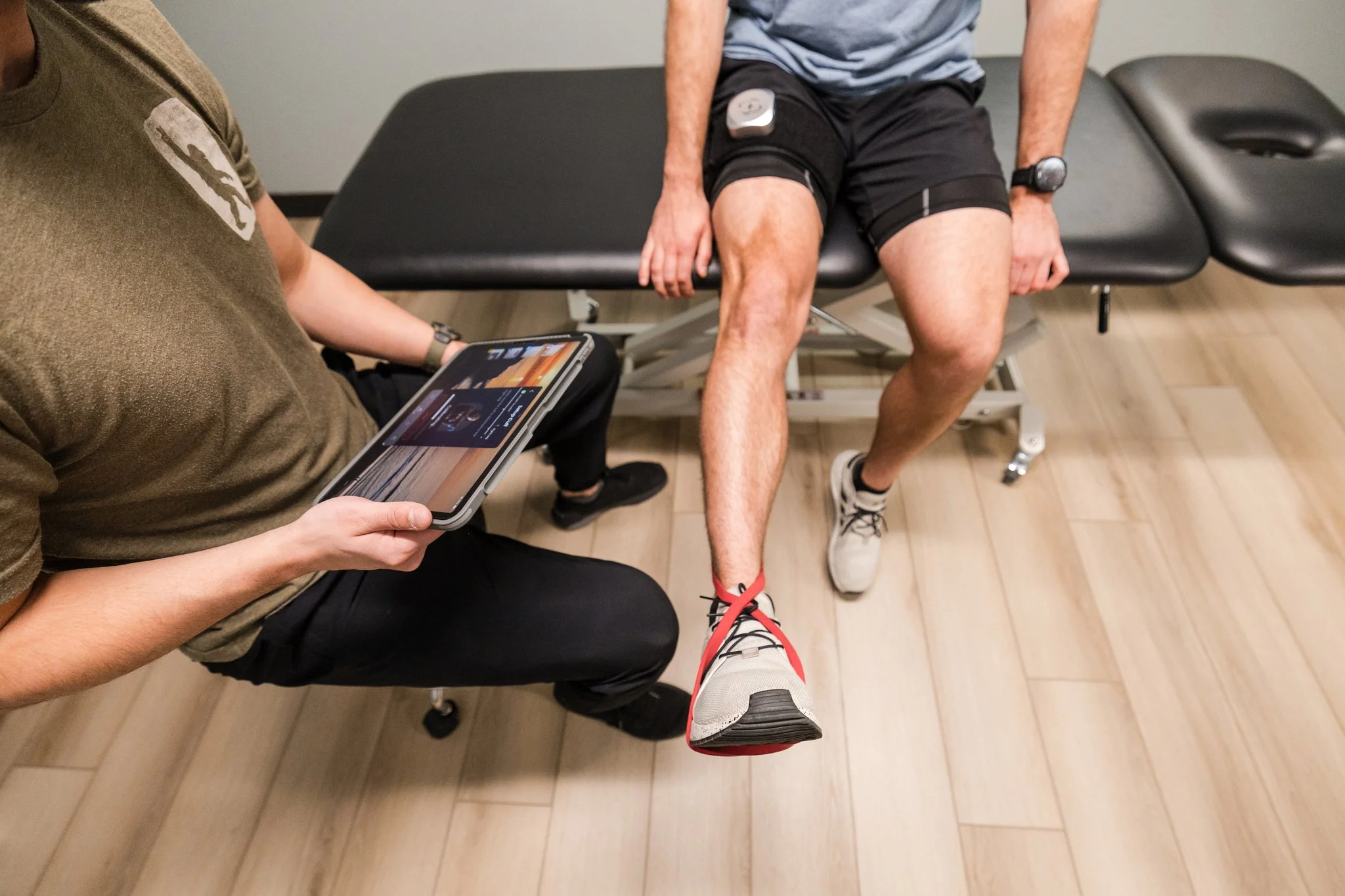
Sessions are typically short — 15 to 20 minutes. You’ll perform low-load exercises (think leg press, knee extensions, bicep curls, you name it) in traditionally a 30-15-15-15 rep scheme with short rest intervals. The muscle pumps, burns and fatigues quickly, which is the point. Most people describe the sensation as intense but manageable. You’ll feel it more than the weight suggests you should.
Does BFR Replace Your Other Rehab Exercises?
The short answer is no. BFR is a tool within your session, not a replacement for it. In most cases, we'll program BFR as one component of a broader rehab plan. We might do some manual therapy or joint mobilizations first, then move into functional movements or sport-specific work, and finish with BFR exercises to target specific muscle strength. The BFR portion typically takes 15–20 minutes of that overall session.
That said, there are situations where a session is built almost entirely around BFR — early post-op, for example, when the list of things you can do is short. In those cases, BFR lets us fill that time productively instead of just doing gentle range-of-motion work and calling it a day. As your recovery progresses and you can tolerate more load, BFR gradually gets phased out in favor of heavier, more functional training. Think of it as a bridge, not a destination.
The Bottom Line
BFR training bridges a gap that used to halt recoveries early on, the period where you’re not healed enough to load heavy, but doing nothing means losing the muscle you need to get back to full performance. If you’re curious whether it might be right for your situation, bring it up at your next visit, we’re happy to walk you through it.
Key Takeaways:
You can build real strength with very light loads. BFR lets patients train at 20–30% of their max and still trigger the same muscle-building response as heavy lifting — which is the core reason it's so valuable during recovery when heavy loading isn't an option.
It's not just for post-surgical patients. BFR is useful across a wide range of situations — bone stress injuries, chronic tendon injuries, and athletes trying to close a strength gap before returning to sport. If heavy loading is a barrier for any reason, BFR is worth considering.
It's a bridge, not a standalone program. BFR fits within a broader rehab session and gets phased out as you progress. It fills the gap between "too hurt to load heavy" and "ready for full training."
Helping athletes RESOLVE THEIR PAIN by CLEARLY DEFINING THE PROBLEM and IMPLEMENTING EFFECTIVE SOLUTIONS to get them back doing the activities they love!
If you are currently struggling with an injury or unable to perform in the activities you enjoy. Please follow the link to schedule a consultation call to discuss how we can help you.