The Runners Guide to ITB Syndrome
Today we are doing a deep dive into ITB syndrome. That outside knee pain, most commonly seen in endurance athletes but can happen in hikers, walkers and anyone seen moving on two feet (sasquatch included).
If you’ve ever dealt with ITB syndrome or been chasing it for months, the most common recommendation for management seen online is foam rolling until you cry, stretch it til it snaps, and take time off. You’ve done this, the pain is better….. but then you start running again and at mile three you feel it again. No you are not alone and no you are not unlucky.
You have been treating the smoke, not the fire.
ITB syndrome is one of the most common overuse injuries we see in the clinic, and can be one of the most frustrating because it has a stubborn habit of returning weeks or months after it seems fixed. The reason is almost always the same, the original treatment plan addressed the pain, but not the system that produced it.
What ITB syndrome actually is (and isn't)
For decades, the going theory was that the iliotibial band, this thick strip of connective tissue running from your hip to just below your knee, has been sliding back and forth over the lateral femoral epicondyle and got irritated from the repetitive friction. The fix, predictably, was to loosen it: foam roll it, stretch it, manually release it.
THEY EVEN WENT AS FAR AS IT BAND RELEASE SURGERY!!!
No they don’t do this anymore and it's a rant for a different day.
Newer imaging and cadaver research has rewritten this story. The IT band does not really slide, it’s anchored. What is likely happening is compression of richly innervated layers of fat and connective tissue between the band and the bone, irritated under repetitive load. The band itself is not tight in any meaningful, fixable sense. You cannot lengthen dense fascia with a foam roller. (Although you can desensitize it)
This matters because it changes what we treat. ITB syndrome is not a tissue-length problem. It is a load tolerance and motor control problem.
Why it keeps coming back
When ITB syndrome recurs, one or more of three things is usually true.
1. Hip strength was never addressed.The lateral hip, made up of the gluteus medius, gluteus minimus, the deep external rotators, is in charge of rotational control of your femur during single leg stance (the most important time period and indicator of success for running). When it is weak or slow to fire, your knee can drift inwards and the pelvis drops on the swing leg every time your foot strikes the ground.
Multiply that by 1,500 strides per mile and you can create an irritability problem at the lateral knee.
Plenty of athletes get back to running once pain calms down without ever building the hip capacity to actually own single leg stance and control of this position.
2. Running mechanics were never reassessed. Three patterns show up repeatedly: a narrow stride that crosses the midline (think tightrope running or what we call scissoring), excessive contralateral pelvic drop, and overstriding with a hard heel strike. Any one of these increases lateral knee load. None of them get better with rest. Rest calms inflammation but does restore tissue capacity. It does not change how you move.
3. The load came back too fast. This can be difficult for even the most experienced runners. After two or three weeks off, the lateral knee feels great, so you pick up where you left off, same mileage, same pace, same hills. But the tissue's tolerance dropped during the layoff, and you have just dumped your old workload onto a system with less capacity than it had before the injury. This is a flare-up waiting to happen.
What rehab should look like
If you want your ITB syndrome to stay gone, rehab has to do three things at once: calm the irritated tissue, build the capacity that was not there before, and reintroduce load in a way the system can absorb.
For most runners, this looks like:
A short de-loading window. Usually one to two weeks where we modify, not necessarily eliminate, running and remove the highest-irritant activities like long downhills. Total rest is rarely the right call; it ramps tolerance down without giving us a chance to rebuild it.
Targeted hip and trunk strengthening a few times per week. Side lying hip abduction, single leg bridges, side planks, Copenhagen adductors, split squats, step-downs, progressed over time. We are after strength not just a burn!
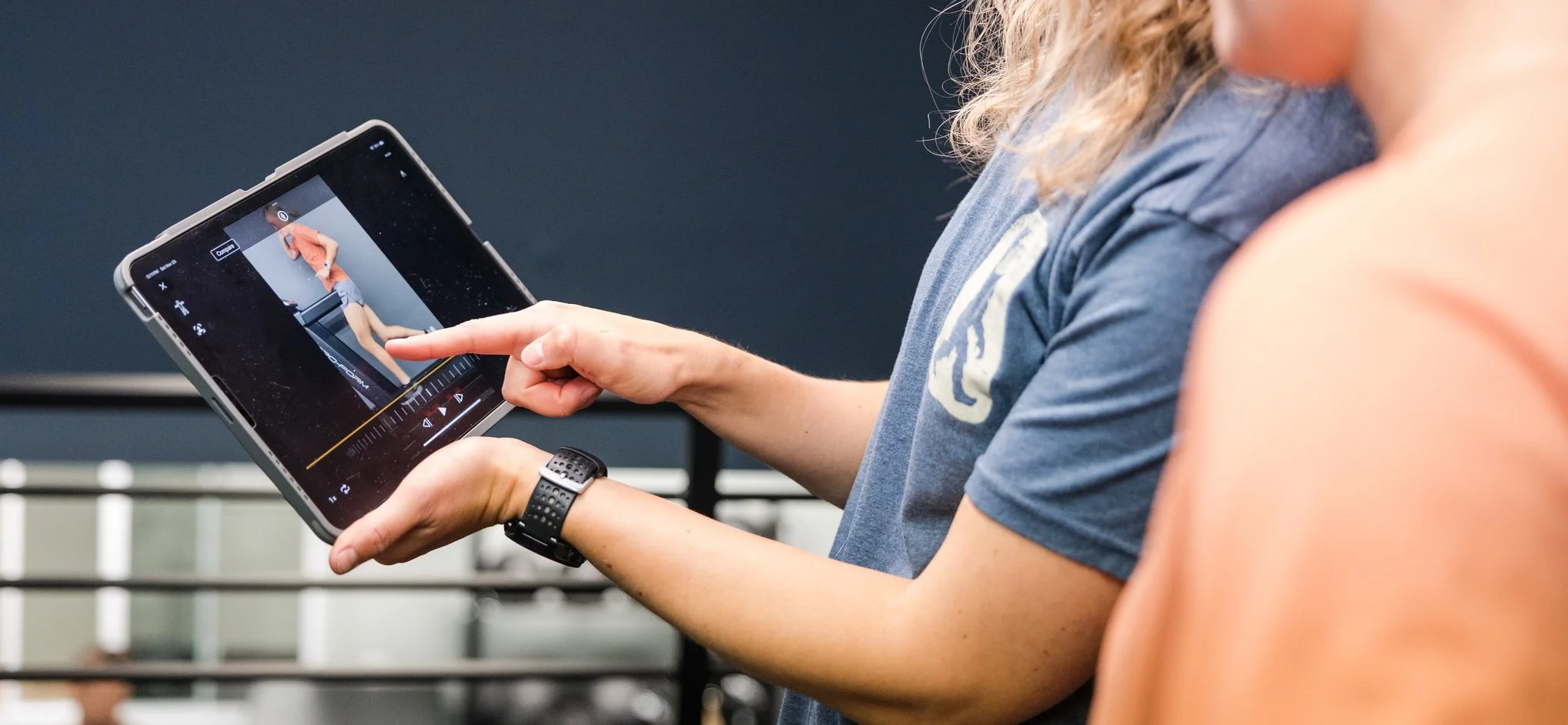
A running assessment. Even simple cues, a slight increase in cadence, a wider stride, eyes-up posture, can offload the lateral knee enough to train through. If it opens some doors to running, it can be well worth it.
A graded return. We typically build mileage back at no more than 10 to 15 percent per week, using a Hi-Lo model, and test tolerance on hills or a longer run before assuming you are back.
The big picture
ITB syndrome is rarely, specifically a knee problem. It is almost always a motor control and a load management problem dressed up as a knee problem. If you treat it that way, as a system to upgrade, not a tissue to release, it stops being a recurring issue.
Key Takeaways:
Your IT band is a long, thick connective tissue that runs from your hip to just below your knee. ITB syndrome was previously considered due to tightness in your ITB but now has been proven to be due to motor patterns and load management problems
If your ITB syndrome keeps coming back, there was something that likely wasn’t addressed in the system along the way. Typically associated with hip strength, running mechanics, and load management.
Proper rehab for ITB syndrome emphasizes strengthening of the lateral hip for improved single leg stability and strength, addressing motor control deficits, and a proper return to run schedule.
Helping athletes RESOLVE THEIR PAIN by CLEARLY DEFINING THE PROBLEM and IMPLEMENTING EFFECTIVE SOLUTIONS to get them back doing the activities they love!
If you are currently struggling with an injury or unable to perform in the activities you enjoy. Please follow the link to schedule a consultation call to discuss how we can help you.